| Distributor | Stock | Pricing | MOQ | PKG | Lead Time | Date Code | On Order Quantity | On Order Delivery | |
|---|---|---|---|---|---|---|---|---|---|
|
19,441 pcs
|
19441 pcs | On Request | 1 | On Request | On Request | On Request | On Request | On Request | |
|
16,459 pcs
|
16459 pcs | On Request | 1 | On Request | On Request | On Request | On Request | On Request | |
|
1,834 pcs
|
1834 pcs | On Request | 1 | On Request | On Request | On Request | On Request | On Request |
| Category | |
| Manufacturer Name | |
| Battery Chemistry | |
| Fault Protection | |
| Function | |
| Input Voltage | |
| Mounting Type | |
| Number of Cells | |
| Operating Temperature | |
| Supplier Device Package |
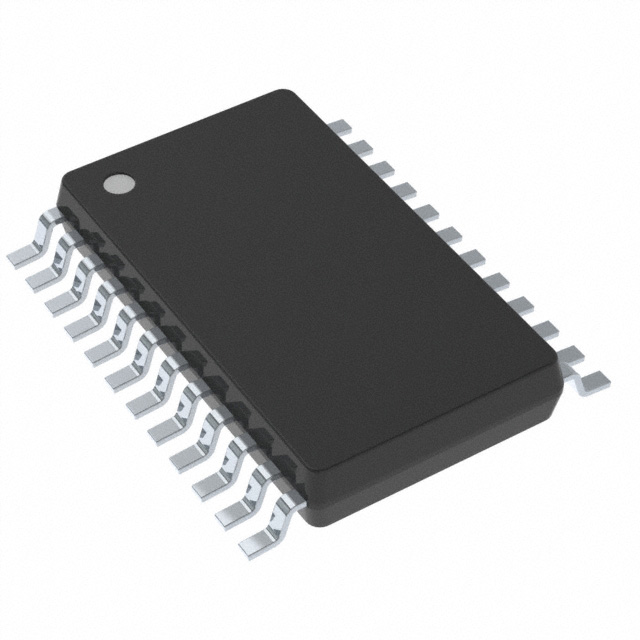
The BQ7791502PWR from Texas Instruments is an ultra-low-power primary protector IC for 3 to 5 series Lithium Ion/Polymer battery stacks. It provides a full suite of voltage, current, and temperature protections, including overvoltage, undervoltage, overcurrent during charge and discharge, short-circuit discharge, and overtemperature protection.
This device features autonomous cell balancing and supports stackable configurations for scalability to 20 series cells or more. It operates with a typical quiescent current of 8 µA in normal mode and 2 µA in HIBERNATE mode, making it suitable for low-power applications. The IC is housed in a 24-TSSOP package and is designed for surface mount.
Key electrical specifications include a maximum input voltage of 25V, overvoltage protection ranging from 3V to 4.575V, and undervoltage protection from 1.2V to 3V. Current protection thresholds are resistor programmable. The operating temperature range is -40°C to 85°C.

| Qty | Low | High |
|---|---|---|
| 1+ | $0.73 | $0.73 |
Estimated market price range - modelled values for guidance only, not live distributor offers.
The operating temperature range is -40°C to 85°C.

The BQ7791502PWR is available in a 24-TSSOP package.
The RoHS status is RoHS3 Compliant.
It can protect 3 to 5 series cells.
The typical operating current in normal mode is 8 µA.
The maximum input voltage is 25 V.
Overvoltage protection is set between 3 V and 4.575 V.