

| Distributor | Stock | Pricing | MOQ | PKG | Lead Time | Date Code | On Order Quantity | On Order Delivery | |
|---|---|---|---|---|---|---|---|---|---|
|
82,650 pcs
|
82650 pcs | On Request | 1 | On Request | On Request | On Request | On Request | On Request | |
|
13 pcs
|
13 pcs | On Request | 1 | On Request | On Request | On Request | On Request | On Request |
| Category | |
| Manufacturer Name | |
| Battery Chemistry | |
| Battery Pack Voltage | |
| Charge Current | |
| Current | |
| Fault Protection | |
| Input Voltage | |
| Mounting Type | |
| Number of Cells | |
| Operating Temperature | |
| Supplier Device Package | |
| Supplier Package | |
| Voltage |
The BQ25040DQCT from Texas Instruments is an integrated linear battery charger designed for space-limited portable applications. It supports charging a single-cell Li-Ion battery with a maximum charge current of 1.1A. The device can operate from a USB port or AC adapter, featuring an input voltage range up to 6.7V and an absolute maximum rating of 30V.
Key electrical features include 1% charge voltage regulation accuracy and 10% charge current accuracy. It also incorporates a 50mA integrated low dropout linear regulator (LDO) and fault protection for over temperature and over voltage conditions. The charger operates within a junction temperature range of 0°C to 125°C.
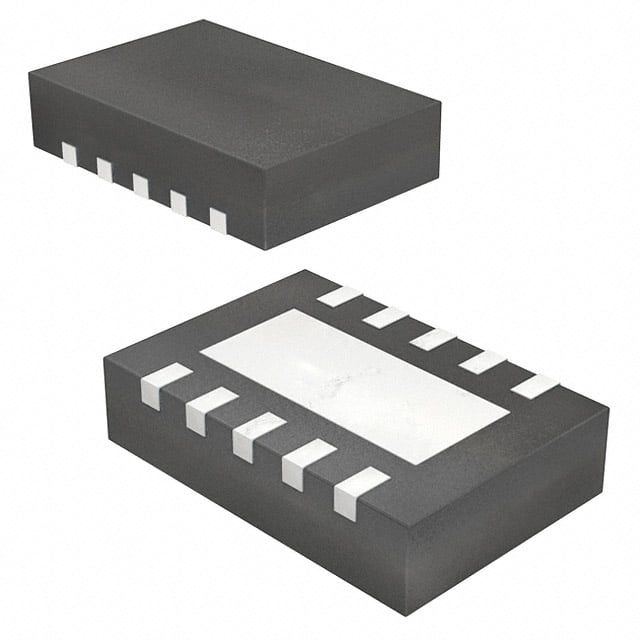
Packaged in a 10-WSON (3mm x 2mm) surface-mount form factor, the BQ25040DQCT is suitable for compact designs. It is supplied on tape and reel with a diameter of 180mm and a width of 8.4mm, with the first pin located in Quadrant 1.
| Qty | Low | High |
|---|---|---|
| 1+ | $0.77 | $0.77 |
Estimated market price range - modelled values for guidance only, not live distributor offers.
The maximum charge current is 1.1A.
The device operates with a minimum input voltage of 4.35V and a maximum of 6.7V.
It is designed to charge a single cell.
It supports Lithium Ion battery chemistry.
The operating temperature range is 0°C to 125°C.
The device is in a 10-WSON (3x2) package.
It includes protection for Over Temperature and Over Voltage.