

| Distributor | Stock | Pricing | MOQ | PKG | Lead Time | Date Code | On Order Quantity | On Order Delivery | |
|---|---|---|---|---|---|---|---|---|---|
|
5,412 pcs
|
5412 pcs | On Request | 1 | On Request | On Request | 1327+ | On Request | On Request | |
|
3,706 pcs
|
3706 pcs | On Request | 1 | On Request | On Request | 12+ | On Request | On Request |
| Category | |
| Manufacturer Name | |
| Battery Chemistry | |
| Battery Pack Voltage | |
| Charge Current | |
| Current | |
| Fault Protection | |
| Input Voltage | |
| Mounting Type | |
| Number of Cells | |
| Operating Temperature | |
| Supplier Device Package | |
| Supplier Package | |
| Voltage |
The BQ24742RHDR from Texas Instruments is a high-efficiency, synchronous battery charger IC suitable for Lithium Ion and Li-polymer battery applications. It is designed to charge two, three, or four series Li+ cells, supporting charge currents up to 10 A.
Key electrical specifications include a programmable charge voltage range of 4-4.512 V/cell and a programmable charge current up to 10 A. The device operates within a 9 V to 24 V input voltage range and features resistor-programmable switching frequencies between 300 kHz and 800 kHz. It also includes a 150 mA trickle-charge current with ±33% accuracy.
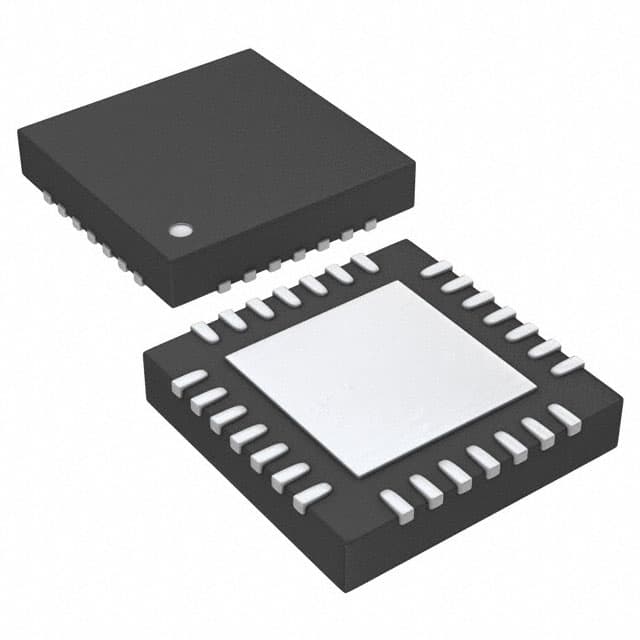
This charger IC offers several safety protections, including over current, over temperature, over voltage, and short circuit protection. It is available in a 28-pin, 5x5-mm2 thin QFN package, suitable for space-constrained designs. The mounting type is surface mount.
The BQ24742RHDR is ideal for applications such as notebook computers, portable data capture terminals, and battery bay chargers where efficient and accurate battery charging is required.
| Qty | Low | High |
|---|---|---|
| 1+ | $0.75 | $0.75 |
Estimated market price range - modelled values for guidance only, not live distributor offers.
4 V to 4.512 V per cell.
Up to 10 A, programmable.
9 V to 24 V.
2 to 4 series Li-Ion or Li-Polymer cells.
28-VQFN Exposed Pad (5x5 mm).
-40°C to 125°C (junction temperature).
Over current, over temperature, over voltage, and short circuit protection.