

| Distributor | Stock | Pricing | MOQ | PKG | Lead Time | Date Code | On Order Quantity | On Order Delivery | |
|---|---|---|---|---|---|---|---|---|---|
|
5,950 pcs
|
5950 pcs | On Request | 1 | On Request | On Request | On Request | On Request | On Request | |
|
3,500 pcs
|
3500 pcs | On Request | 1 | On Request | On Request | 18+ | On Request | On Request |
| Category | |
| Manufacturer Name | |
| Battery Chemistry | |
| Battery Pack Voltage | |
| Charge Current | |
| Control Interface | |
| Current | |
| Efficiency | |
| Fault Protection | |
| Frequency | |
| Mounting Type | |
| Number of Cells | |
| Operating Temperature | |
| Supplier Device Package | |
| Supplier Package | |
| Voltage |
The BQ24704RGER is a host-controlled, multi-chemistry battery charger IC manufactured by Texas Instruments. It is designed to charge Lithium-Ion and Li-Polymer batteries, supporting configurations of 2, 3, or 4 series cells.
Key electrical specifications include a maximum charge current of 10A and an input voltage range from 8V to 24V, with an absolute maximum rating of 30V. The device operates with a switch-mode buck topology, offering high efficiency of over 95% and a switching frequency of 300 kHz. It provides precise regulation with ±0.5% charge voltage accuracy and ±3% charge current accuracy.
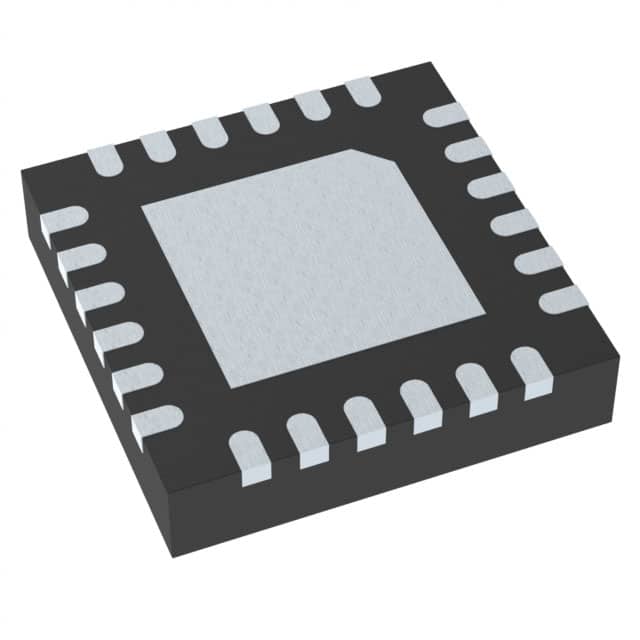
This IC features a standalone (RC-Settable) control interface and includes safety functions such as overcurrent, over-temperature, and overvoltage protection. It is housed in a 24-VQFN (4x4 mm) package, suitable for surface mounting.
Applications for the BQ24704RGER include notebook and netbook computers, portable data-capture terminals, portable printers, medical diagnostics equipment, battery bay chargers, and battery back-up systems.
| Qty | Low | High |
|---|---|---|
| 1+ | $5.96 | $5.96 |
Estimated market price range - modelled values for guidance only, not live distributor offers.
8V to 24V with absolute maximum of 30V.
Li-Ion and Li-Polymer.
10A.
-40°C to 125°C junction temperature.
24-VQFN Exposed Pad (4x4mm).
Over-current, over-temperature, and over-voltage protection.
Greater than 95%.