

| Distributor | Stock | Pricing | MOQ | PKG | Lead Time | Date Code | On Order Quantity | On Order Delivery | |
|---|---|---|---|---|---|---|---|---|---|
|
427 pcs
|
427 pcs | On Request | 1 | On Request | On Request | 15+ | On Request | On Request |
| Category | |
| Manufacturer Name | |
| Battery Chemistry | |
| Battery Pack Voltage | |
| Charge Current | |
| Current | |
| Fault Protection | |
| Interface | |
| Mounting Type | |
| Number of Cells | |
| Operating Temperature | |
| Programmable Features | |
| Supplier Device Package | |
| Supplier Package | |
| Voltage |
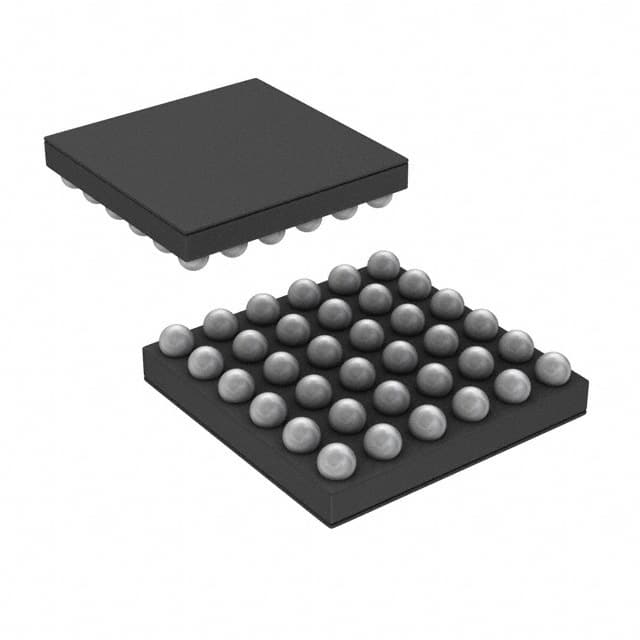
The BQ24187YFFR from Texas Instruments is a highly integrated single-cell Li-Ion battery charger designed for space-limited portable applications. This device supports charge rates up to 2A with 93% peak efficiency and features a 30V input rating with over-voltage protection. It also offers USB OTG support, capable of supplying 5V at 1A.
The charger parameters are programmable via an I2C interface, including charge voltage, current, and input current limit. It includes integrated FETs and a current sense resistor, contributing to a small solution size. The BQ24187YFFR is housed in a compact 36-DSBGA package, suitable for surface mounting.
Key features include Charge Time Optimizer, JEITA compatible NTC monitoring, and thermal regulation protection. This makes it ideal for smartphones, tablets, power banks, and other portable electronic devices requiring efficient and safe battery management.
| Qty | Low | High |
|---|---|---|
| 1+ | $0.75 | $0.75 |
Estimated market price range - modelled values for guidance only, not live distributor offers.
The device supports a maximum input voltage of 30V with over-voltage protection, and for USB operation it accepts 5V with OVP at 6.5V.
The integrated FETs allow a charge rate up to 2A.
It is designed for a single-cell (1S) Lithium-Ion battery with a maximum charge voltage of 4.44V.
It is available in a 36-UFBGA or 36-DSBGA (2.63x2.46mm) package for surface mount assembly.
The device operates from -40°C to 85°C ambient.
The charger is programmable via an I²C interface, allowing control of charge current.
The device includes over-temperature and over-voltage protection.