

| Distributor | Stock | Pricing | MOQ | PKG | Lead Time | Date Code | On Order Quantity | On Order Delivery | |
|---|---|---|---|---|---|---|---|---|---|
|
46 pcs
|
46 pcs | On Request | 1 | On Request | On Request | On Request | On Request | On Request |
| Category | |
| Manufacturer Name | |
| Battery Chemistry | |
| Battery Pack Voltage | |
| Charge Current | |
| Current | |
| Fault Protection | |
| Input Voltage | |
| Interface | |
| Mounting Type | |
| Number of Cells | |
| Operating Temperature | |
| Supplier Device Package | |
| Voltage |
The BQ24163RGET from Texas Instruments is a high-efficiency, switched-mode, single-cell Li-Ion battery charger with dual-input and power path management. It supports charge currents up to 2.5A and operates within an input voltage range of 4.2V to 10V, with an absolute maximum rating of 20V.
This IC is designed for flexible charging applications, offering features such as battery temperature monitoring (JEITA and hot/cold profiles), input current limit (IINDPM), and input overvoltage protection (OVP). The charge parameters are programmable via an I2C interface, providing precise control over the charging process. The battery charge voltage ranges from 3.5V to 4.44V.
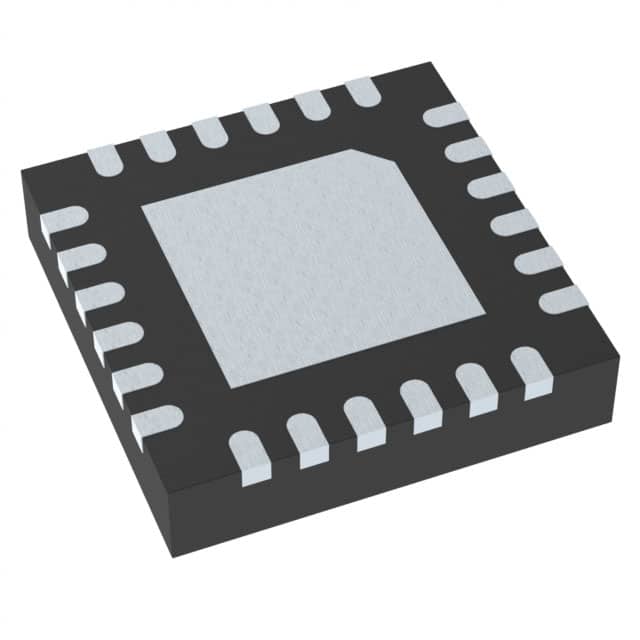
Available in a 24-VQFN (4x4 mm) package, the BQ24163RGET is suitable for surface mount applications. Its operating temperature range is -40°C to 85°C, making it robust for various environmental conditions. The charger can instantly start up a system from a deeply discharged battery or when no battery is present.
Key features include 1% battery regulation accuracy and 10% charge current accuracy. It is compatible with MaxLife technology for enhanced charging performance when used with compatible fuel gauges.
| Qty | Low | High |
|---|---|---|
| 1+ | $3.01 | $3.01 |
Estimated market price range - modelled values for guidance only, not live distributor offers.
The input voltage range is 4.2V to 10V, with an absolute maximum of 20V.
It is available in a 24-VQFN (4x4mm) package with exposed pad.
-40°C to 85°C.
2.5A, programmable via I2C.
I2C.
Li-Ion/Li-Polymer.
Over-temperature and over-voltage protection.