

| Distributor | Stock | Pricing | MOQ | PKG | Lead Time | Date Code | On Order Quantity | On Order Delivery | |
|---|---|---|---|---|---|---|---|---|---|
|
1,577 pcs
|
1577 pcs | On Request | 1 | On Request | On Request | On Request | On Request | On Request | |
|
1,441 pcs
|
1441 pcs | On Request | 1 | On Request | On Request | 2021+ | On Request | On Request | |
|
8 pcs
|
8 pcs | On Request | 1 | On Request | On Request | On Request | On Request | On Request |
| Category | |
| Manufacturer Name | |
| Connectivity | |
| Core Processor | |
| Core Size | |
| Data Converters | |
| Frequency | |
| Mounting Type | |
| Number of I | |
| Operating Temperature | |
| Oscillator Type | |
| Peripherals | |
| Program Memory Size | |
| Program Memory Type | |
| RAM Size | |
| Speed | |
| Supplier Device Package | |
| Supplier Package | |
| Voltage |
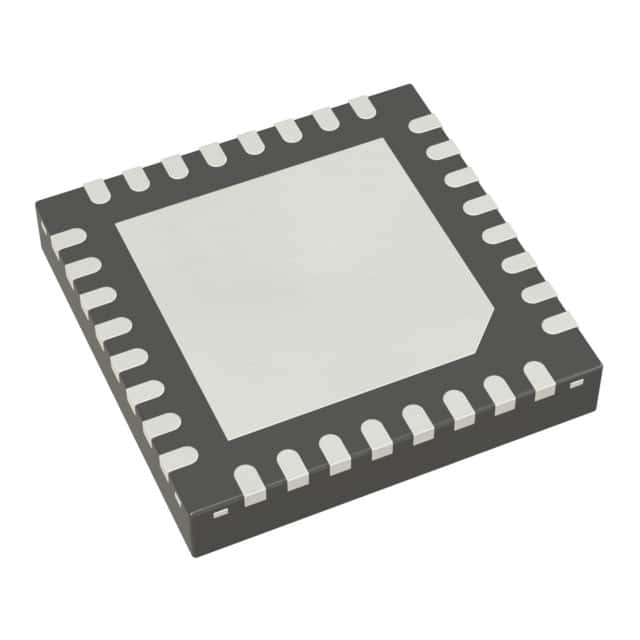
The Microchip Technology ATSAMD20E17A-MU is a low-power microcontroller based on the 32-bit ARM Cortex-M0+ processor. It offers 128KB of FLASH program memory and 16KB of SRAM, making it suitable for a variety of embedded applications.
This device operates at a maximum frequency of 48MHz and supports interfaces such as I2C, SPI, and UART/USART. It includes peripherals like Brown-out Detect/Reset, POR, and WDT, along with 10 channels of 12-bit Analog-to-Digital conversion and a 10-bit Digital-to-Analog converter.
The ATSAMD20E17A-MU is designed for surface mount applications and comes in a 32-VQFN (5x5) package with an exposed pad. It operates within a voltage range of 1.62V to 3.6V and has an operating temperature range of -40°C to 85°C.
Key electrical characteristics include a 32-bit single-core architecture and internal oscillator. The microcontroller is designed for efficiency and performance in embedded systems.
The operating voltage range is 1.62V to 3.6V.
It is available in a 32-VFQFN exposed pad package for surface mounting.
The operating temperature range is -40°C to 85°C.
It has 128KB of FLASH program memory and 16KB of RAM.
It uses an ARM Cortex-M0+ core.
It supports I2C, SPI, and UART/USART interfaces.
There are 26 I/O pins available.