

| Distributor | Stock | Pricing | MOQ | PKG | Lead Time | Date Code | On Order Quantity | On Order Delivery | |
|---|---|---|---|---|---|---|---|---|---|
|
2,200 pcs
|
2200 pcs | On Request | 1 | On Request | On Request | On Request | On Request | On Request | |
|
1,077 pcs
|
1077 pcs | On Request | 1 | On Request | On Request | On Request | On Request | On Request |
| Category | |
| Manufacturer Name | |
| Co | |
| Core Processor | |
| Display & Interface Controllers | |
| Ethernet | |
| Graphics Acceleration | |
| Industrial Grade | |
| Mounting Type | |
| Number of Cores | |
| Operating Temperature | |
| RAM Controllers | |
| Security Features | |
| Speed | |
| Supplier Device Package | |
| USB | |
| Voltage |
The ATSAMA5D27C-D1G-CU is a 32-bit microprocessor based on the ARM Cortex-A5 core, running at 500 MHz. It is designed for embedded applications requiring a balance of performance and power efficiency.
Key specifications include a nominal supply voltage of 3.3V, an operating temperature range of -40°C to +85°C, and surface mount packaging in a 289-TFBGA (14x14 mm) case. The device integrates a NEON MPE multimedia coprocessor and features hardware security capabilities such as ARM TrustZone, cryptography, secure memory, and secure boot.
Interface support includes USB 2.0 with HSIC, a 10/100 Mbps Ethernet controller, and memory controllers for LPDDR1, LPDDR2, LPDDR3, DDR2, DDR3, DDR3L, and QSPI. The processor also includes display and interface controllers for keyboard, LCD, and touchscreen.
This microprocessor is suitable for industrial and embedded systems that require extended temperature tolerance and robust security features.
The nominal supply voltage is 3.3V.
The operating temperature range is -40°C to +85°C.
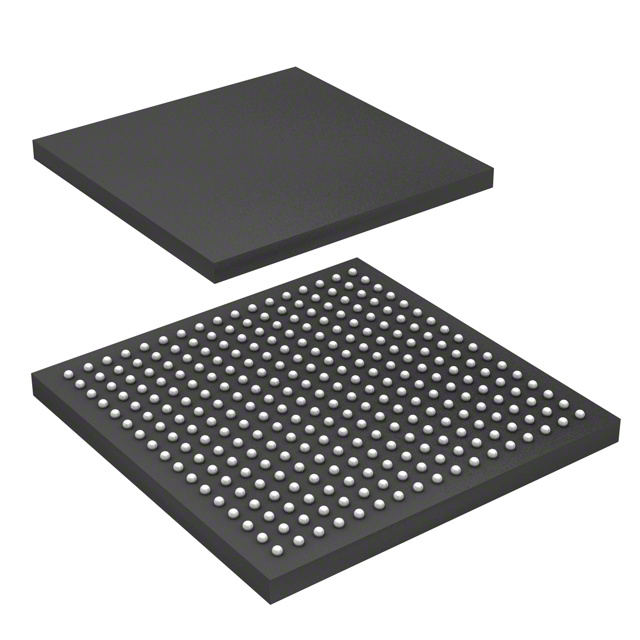
It comes in a 289-TFBGA (14x14 mm) surface mount package.
The part is listed as RoHS3 Compliant, but compliance data is unverified and has low confidence.
It uses an ARM Cortex-A5 32-bit core.
It supports LPDDR1, LPDDR2, LPDDR3, DDR2, DDR3, DDR3L, and QSPI memory.
Yes, it includes ARM TrustZone, boot security, cryptography, RTIC, secure fusebox, secure JTAG, secure memory, and secure RTC.