
ATMEGA48P-20AU
Microchip Technology
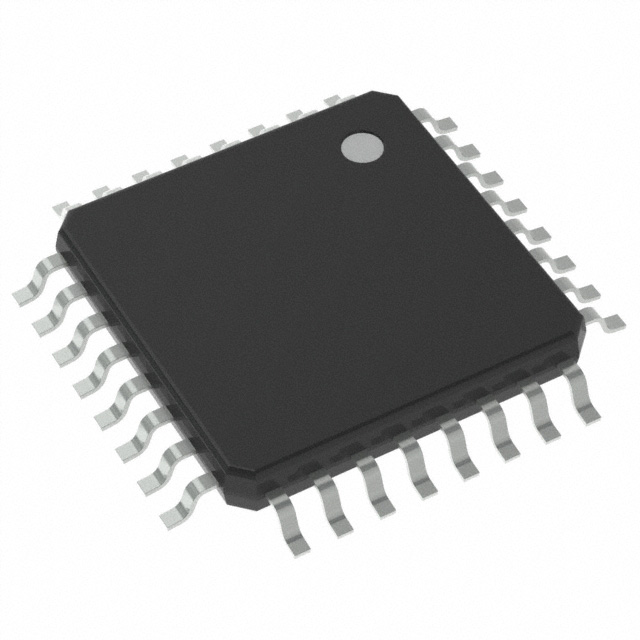
Microchip Technology ATmega48P-20AU is an 8-bit AVR microcontroller with 4KB Flash, 512B RAM, and 256B EEPROM. It operates at up to 20 MHz and comes in a 32-TQFP package.


| Distributor | Stock | Pricing | MOQ | PKG | Lead Time | Date Code | On Order Quantity | On Order Delivery | |
|---|---|---|---|---|---|---|---|---|---|
|
36,160 pcs
|
36160 pcs | On Request | 1 | On Request | On Request | On Request | On Request | On Request |
| Category | |
| Manufacturer Name | |
| Connectivity | |
| Core Processor | |
| Core Size | |
| Data Converters | |
| EEPROM Size | |
| Mounting Type | |
| Number of I | |
| Operating Temperature | |
| Oscillator Type | |
| Peripherals | |
| Program Memory Size | |
| Program Memory Type | |
| RAM Size | |
| Speed | |
| Supplier Device Package | |
| Voltage |
The ATMEGA48-20AI is an 8-bit AVR microcontroller from Microchip Technology, part of the ATmega48 family. It features 4KB of in-system self-programmable Flash memory, 512B of SRAM, and 256B of EEPROM, with endurance of 10,000 write/erase cycles for Flash and 100,000 for EEPROM. The device operates at a maximum speed of 20 MHz, delivering up to 20 MIPS throughput thanks to its advanced RISC architecture with 131 instructions, most executed in a single clock cycle.
This microcontroller includes 23 programmable I/O lines and a range of peripherals: two 8-bit timer/counters, one 16-bit timer/counter, six PWM channels, an 8-channel 10-bit ADC, and serial interfaces including I²C, SPI, and UART/USART. It also features a programmable watchdog timer, brown-out detection, power-on reset, and an internal calibrated oscillator. The operating voltage range is 2.7V to 5.5V, and it is specified for the industrial temperature range of -40°C to 85°C.
The ATMEGA48-20AI is supplied in a 32-lead TQFP package with a 7x7 mm body, suitable for surface-mount assembly. Its low-power consumption, with typical active mode current of 240 µA at 1 MHz and 1.8V, and power-down mode current of 0.1 µA, makes it suitable for battery-powered and energy-sensitive applications. The device supports five sleep modes for further power optimization.
Typical applications include embedded control systems, sensor interfaces, motor control, and communication bridges. The combination of Flash memory, EEPROM, and analog features makes it a versatile choice for cost-sensitive designs requiring moderate processing power and peripheral integration.
2.7V to 5.5V.
32-lead TQFP (7x7 mm).
-40°C to 85°C.
RoHS3 compliant (unverified).
4KB (2K x 16).
23 programmable I/O lines.
I²C, SPI, UART/USART.
