

| Distributor | Stock | Pricing | MOQ | PKG | Lead Time | Date Code | On Order Quantity | On Order Delivery | |
|---|---|---|---|---|---|---|---|---|---|
|
1,718 pcs
|
1718 pcs | On Request | 1 | On Request | On Request | On Request | On Request | On Request | |
|
1 pcs
|
1 pcs | On Request | 1 | On Request | On Request | On Request | On Request | On Request |
| Category | |
| Manufacturer Name | |
| Connectivity | |
| Core Processor | |
| Core Size | |
| Data Converters | |
| EEPROM Size | |
| Mounting Type | |
| Number of I | |
| Operating Temperature | |
| Oscillator Type | |
| Peripherals | |
| Program Memory Size | |
| Program Memory Type | |
| RAM Size | |
| Speed | |
| Supplier Device Package | |
| Voltage |
The ATMEGA168V-10MU is an 8-bit AVR microcontroller from Microchip Technology built on the AVR enhanced RISC architecture. It executes powerful instructions in a single clock cycle, achieving throughputs close to 1 MIPS per MHz. The device operates from a 1.8V to 5.5V supply and runs at a maximum speed of 10MHz.
The microcontroller includes 16KB of in-system self-programmable Flash memory (organized as 8K x 16), 1KB of SRAM, and 512 bytes of EEPROM. It provides 23 general-purpose I/O lines and a range of peripherals such as brown-out detection, power-on reset, PWM, and a watchdog timer. An 8-channel 10-bit analog-to-digital converter is also integrated for sensor interfacing.
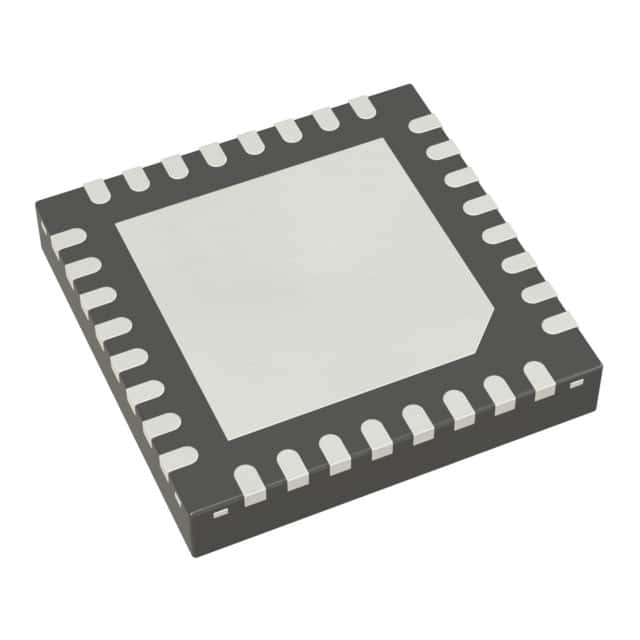
For serial communication, the device supports I2C, SPI, and UART/USART protocols. It is available in a 32-VFQFN exposed pad package (32-VQFN 5x5 mm) with surface-mount mounting. The operating temperature range is -40°C to +85°C, making it suitable for industrial temperature environments.
The supply voltage range is 1.8V to 5.5V.
It is available in a 32-VFQFN exposed pad package (supplier device package 32-VQFN 5x5 mm) and is surface-mount.
-40°C to 85°C (TA).
The part is marked RoHS3 compliant, though this is not independently verified.
It uses an AVR core with 8-bit data width.
It has 16KB (8K x 16) of Flash program memory.
I2C, SPI, and UART/USART.