

| Distributor | Stock | Pricing | MOQ | PKG | Lead Time | Date Code | On Order Quantity | On Order Delivery | |
|---|---|---|---|---|---|---|---|---|---|
|
2,000 pcs
|
2000 pcs | On Request | 1 | On Request | On Request | 20+ | On Request | On Request |
| Category | |
| Manufacturer Name | |
| Connectivity | |
| Core Processor | |
| Core Size | |
| Data Converters | |
| EEPROM Size | |
| Mounting Type | |
| Number of I | |
| Operating Temperature | |
| Oscillator Type | |
| Peripherals | |
| Program Memory Size | |
| Program Memory Type | |
| RAM Size | |
| Speed | |
| Supplier Device Package | |
| Voltage |
The AT90CAN64-15MT is a high-performance, low-power 8-bit AVR microcontroller designed by Microchip Technology. It is based on advanced RISC architecture with 133 instructions, most executing in a single clock cycle, achieving up to 16 MIPS throughput at 16 MHz.
It features 64KB of in-system reprogrammable Flash, 4KB SRAM, and 2KB EEPROM. The microcontroller includes a CAN 2.0A/B controller certified to ISO 16845, 15 full message objects, and supports other connectivity such as I²C, SPI, and UART/USART.
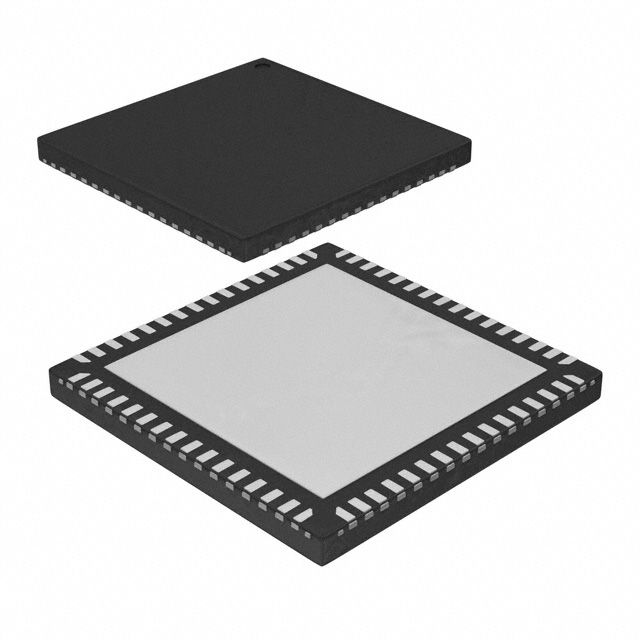
On-chip peripherals include an 8-channel 10-bit SAR ADC with differential and programmable gain options, dual 16-bit timers, 8-bit timers, PWM outputs, watchdog timer, and brown-out detection. The device operates from 2.7V to 5.5V and is available in a 64-VFQFN exposed pad package (64-QFN 9x9mm) for surface mount.
The integrated CAN interface makes it suitable for automotive and industrial control systems, especially where robust communication is required. The device supports JTAG for debugging and programming, and features an internal oscillator.
2.7V to 5.5V.
64-VFQFN Exposed Pad (64-QFN 9x9) surface mount.
Existing data shows -40°C to 85°C, while the datasheet specifies -40°C to +125°C for automotive grade. Verify the correct variant.
RoHS3 Compliant according to existing data, but unverified with low confidence.
16 MHz at 4.5V, 8 MHz at 2.7V.
64KB Flash, 4KB SRAM, 2KB EEPROM.
CANbus (ISO 16845 certified), I²C, SPI, UART/USART.