Ready to onboard?
Are you ready to join DistyParts and
grow your business?


| Distributor | Stock | Pricing | MOQ | PKG | Lead Time | Date Code | On Order Quantity | On Order Delivery | |
|---|---|---|---|---|---|---|---|---|---|
|
40 pcs
|
40 pcs | On Request | 1 | On Request | On Request | 0730 | On Request | On Request |
| Category | |
| Manufacturer Name | |
| Current | |
| Current Rating | |
| Diameter | |
| Driver Circuitry | |
| Frequency | |
| Height | |
| Input Type | |
| Lead Style | |
| Mounting Type | |
| Operating Frequency | |
| Operating Mode | |
| Operating Temperature | |
| Operating Temperature Range | |
| Port Location | |
| Rated Voltage | |
| Sound Pressure Level (SPL) | |
| Sound Pressure Level (Typical @ 3V, 10cm) | |
| Tape & Reel | |
| Technology | |
| Termination | |
| Termination Style | |
| Voltage | |
| Voltage Range |
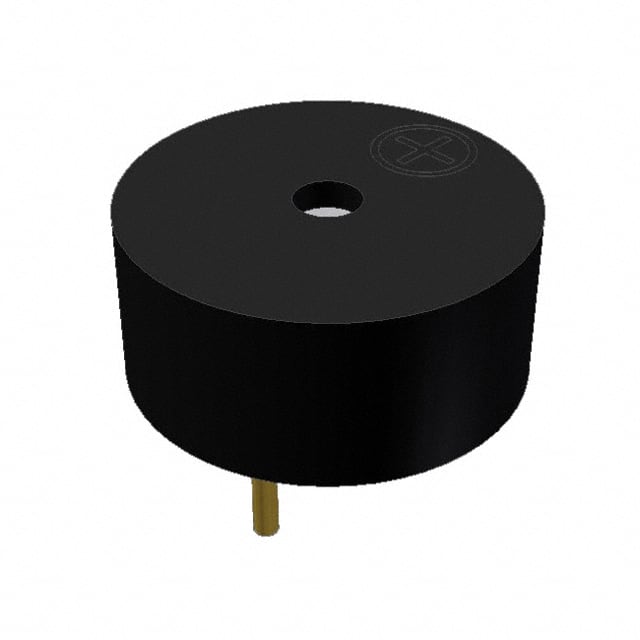
The AT-0927-TT-2-R is an electromechanical magnetic buzzer from PUI Audio, Inc. It is rated for 3V operation with a voltage range of 2V to 4V and draws a typical current of 70mA. The buzzer produces a single tone at a resonant frequency of 2.73kHz and provides a typical sound pressure level of 86dB at a distance of 10cm when driven with a 3V peak-to-peak signal.
The transducer requires an external driving circuit, as it does not contain an internal oscillator. The package is a 9.00mm diameter through-hole component with a height of 4.20mm. The port is located on the top, and the device terminates in PC pins for straightforward PCB mounting. The operating temperature range is -20°C to 70°C, making it suitable for a variety of indoor electronic applications.
| Qty | Low | High |
|---|---|---|
| 1+ | $2.19 | $2.19 |
| 10+ | $1.69 | $1.69 |
| 25+ | $1.53 | $1.53 |
| 50+ | $1.42 | $1.42 |
| 100+ | $1.31 | $1.31 |
| 300+ | $1.20 | $1.20 |
Estimated market price range - modelled values for guidance only, not live distributor offers.
The rated voltage is 3V, with an operating range of 2V to 4V.
The operating frequency is 2.73kHz.
Typical sound pressure level is 86dB at 3V, measured at 10cm.
No, it is a transducer with external drive circuitry required. It requires a peak-to-peak signal input.
It is a through-hole component with PC pin termination.