

| Distributor | Stock | Pricing | MOQ | PKG | Lead Time | Date Code | On Order Quantity | On Order Delivery | |
|---|---|---|---|---|---|---|---|---|---|
|
78,609 pcs
|
78609 pcs | On Request | 1 | On Request | On Request | On Request | On Request | On Request | |
|
2,500 pcs
|
2500 pcs | On Request | 1 | On Request | On Request | 21+ | On Request | On Request | |
|
2,000 pcs
|
2000 pcs | On Request | 1 | On Request | On Request | On Request | On Request | 2026-02-16 21:33:16 | |
|
1,646 pcs
|
1646 pcs | On Request | 1 | On Request | On Request | On Request | On Request | On Request |
| Category | |
| Manufacturer Name | |
| Data Rate | |
| Duplex | |
| Industrial Grade | |
| Lead Spacing | |
| Lead Style | |
| Mounting Type | |
| Number of Drivers | |
| Operating Temperature | |
| Output Type | |
| Power Dissipation | |
| Protocol | |
| Receiver Hysteresis | |
| Supplier Device Package | |
| Supply Current | |
| Tape & Reel | |
| Termination Style | |
| Type | |
| Voltage |
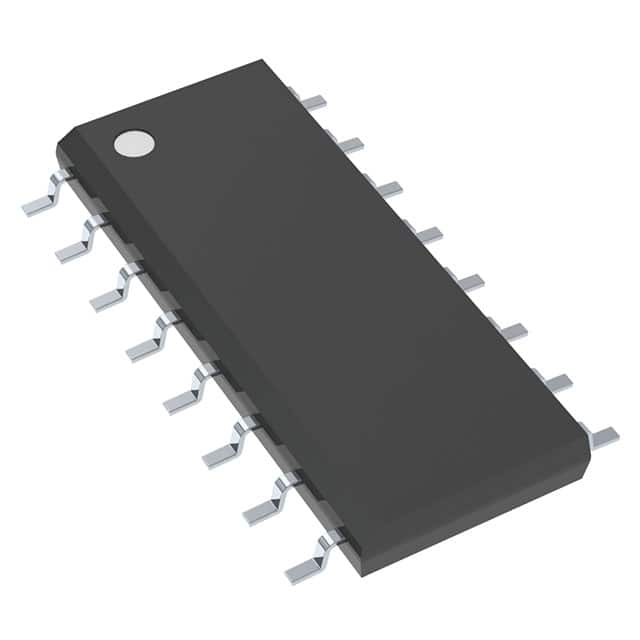
The AM26LV32IDR is a BiCMOS quadruple differential line receiver designed for balanced bus transmission at switching rates up to 32 MHz. It operates from a single 3.3V supply and features ultra-low power dissipation of 27 mW typical. The device includes four receivers with 3-state outputs and common enable function. It supports RS-422 and RS-485 protocols with a common-mode input voltage range of -0.3V to 5.5V and input sensitivity of ±200 mV. The receiver hysteresis of 50 mV provides increased noise immunity. The device is fail-safe for open, short, and terminated conditions. It accepts 5V logic inputs with 3.3V VCC. The AM26LV32IDR is available in a 16-SOIC surface-mount package and operates over -40°C to 85°C temperature range. It is pin-to-pin compatible with AM26C32 and AM26LS32. Typical applications include industrial automation, motor control, and building automation.
| Qty | Low | High |
|---|---|---|
| 1+ | $0.65 | $0.65 |
Estimated market price range - modelled values for guidance only, not live distributor offers.
3V to 3.6V.
16-SOIC (0.154", 3.90mm Width).
-40°C to 85°C.
Yes, RoHS3 Compliant (unverified).
32 Mbps.
4.
Yes, open-circuit, short-circuit, and terminated fail-safe.