

| Distributor | Stock | Pricing | MOQ | PKG | Lead Time | Date Code | On Order Quantity | On Order Delivery | |
|---|---|---|---|---|---|---|---|---|---|
|
200,000 pcs
|
200000 pcs | On Request | 1 | On Request | On Request | On Request | On Request | On Request | |
|
17 pcs
|
17 pcs | On Request | 1 | On Request | On Request | On Request | On Request | On Request |
| Category | |
| Manufacturer Name | |
| Duplex | |
| Fault Protection | |
| Military Grade | |
| Mounting Type | |
| Number of Drivers | |
| Operating Temperature | |
| SVHC Present | |
| Supplier Device Package | |
| Supply Current | |
| Type | |
| Voltage |
The AM26C31MDREP from Texas Instruments is a quadruple differential line driver featuring complementary outputs. It is engineered to meet the stringent requirements of TIA/EIA-422-B and ITU recommendation V.11.
This device boasts a signaling rate of up to 10 Mbps, making it suitable for high-speed data transmission. It operates from a single 5V supply and consumes a low supply current of typically 100µA. Key electrical characteristics include a common-mode range of -7V to 7V and fault protection from -14V to 14V.
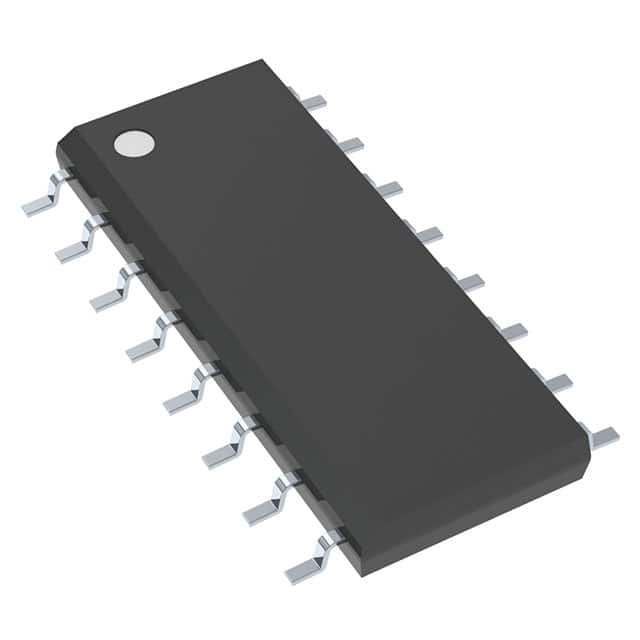
The AM26C31MDREP is available in a 16-SOIC package, designed for surface mounting. It operates across a wide temperature range of -55°C to 125°C, suitable for demanding environmental conditions. The device also features high output impedance in power-off states.
This driver is an improved replacement for the AM26LS31 device and is qualified for high-reliability automotive applications. It meets or exceeds the requirements of TIA/EIA-422-B and ITU recommendation V.11.
| Qty | Low | High |
|---|---|---|
| 1+ | $3.51 | $3.51 |
Estimated market price range - modelled values for guidance only, not live distributor offers.
The supply voltage range is 4.5V to 5.5V.
The maximum signaling rate is 10 Mbps.
The operating temperature range is -55°C to 125°C.
It is available in a 16-SOIC surface mount package.
It has 4 transmitters (0 receivers).
The maximum supply current is 3.2 mA, with a typical low-power mode of 100 µA.
No, the device is not isolated.