

| Distributor | Stock | Pricing | MOQ | PKG | Lead Time | Date Code | On Order Quantity | On Order Delivery | |
|---|---|---|---|---|---|---|---|---|---|
|
100,000 pcs
|
100000 pcs | On Request | 1 | On Request | On Request | On Request | On Request | On Request |
| Category | |
| Manufacturer Name | |
| Coil Current | |
| Coil Insulation | |
| Coil Type | |
| Coil Voltage | |
| Contact Form | |
| Contact Material | |
| Contact Rating (Current) | |
| Features | |
| Mounting Type | |
| Must Operate Voltage | |
| Operate Time | |
| Operating Temperature | |
| Relay Type | |
| Release Time | |
| Seal Rating | |
| Switching Voltage | |
| Termination Style |
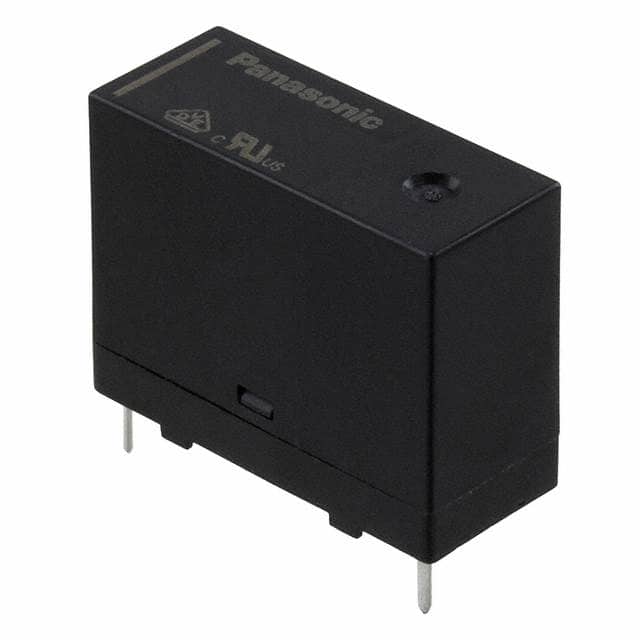
This Panasonic Electronic Components ADW1105TW is a general purpose power relay designed for reliable switching applications. It offers a robust contact rating of 8A and operates with a 5VDC coil voltage. The relay features a SPST-NO (1 Form A) contact configuration and a contact material of Silver Tin Oxide (AgSnO) for durability.
Designed for through-hole mounting with a PC pin termination style, this relay is suitable for various PCB applications. It has an operate time and release time of 15 ms, ensuring efficient operation. The operating temperature range is -40°C to 85°C, making it adaptable to different environmental conditions. The coil insulation is rated Class F, and the seal rating is Sealed - Flux Protection.
Compliance includes RoHS3 status. The relay is built to IEC standards, indicated by its features. Its compact design and reliable performance make it a suitable choice for power switching needs in electronic circuits.
| Qty | Low | High |
|---|---|---|
| 1+ | $2.00 | $2.00 |
Estimated market price range - modelled values for guidance only, not live distributor offers.
The coil voltage for the ADW1105TW relay is 5VDC.
The contact current rating of the ADW1105TW relay is 8A.
The contact form of the ADW1105TW relay is SPST-NO (1 Form A).
The operating temperature range for the ADW1105TW relay is -40°C to 85°C.
The ADW1105TW relay is mounted using the through hole method.