

| Distributor | Stock | Pricing | MOQ | PKG | Lead Time | Date Code | On Order Quantity | On Order Delivery | |
|---|---|---|---|---|---|---|---|---|---|
|
1 pcs
|
1 pcs | On Request | 1 | On Request | On Request | On Request | On Request | On Request |
| Category | |
| Manufacturer Name | |
| Clock Rate | |
| Height | |
| Interface | |
| Mounting Type | |
| Non | |
| Number of Pins | |
| On | |
| Operating Temperature | |
| RAM Size | |
| Supplier Device Package | |
| Type | |
| Voltage | |
| Width |
The ADSP-BF506BSWZ-3F is a 16-bit fixed-point digital signal processor from Analog Devices, operating at a clock rate of 300 MHz. It integrates 4 MB of flash memory, 64 KB of RAM, and a 12-bit ADC with one input channel for analog signal capture.
The processor provides a versatile set of communication interfaces, including CAN, EBI/EMI, I²C, IrDA, PPI, SPI, SPORT, and UART/USART, supporting a wide range of embedded applications. The core operates at a typical 1.8 V, while the I/O supply is 3.3 V with an optional 2.5 V mode.
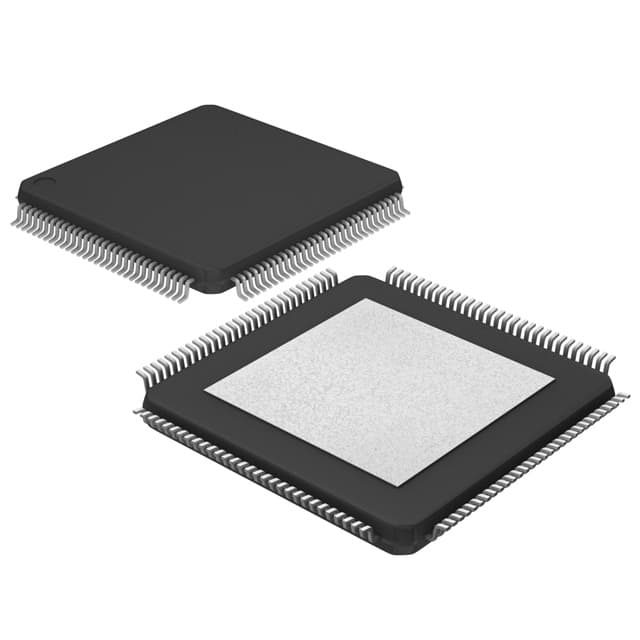
The device is housed in a 120-lead LQFP package with exposed pad (120-LQFP-EP, 14x14 mm) and is rated for surface-mount assembly. It operates over an industrial temperature range of -40°C to +85°C, making it suitable for demanding environments.
The processor is designed for real-time signal processing tasks such as audio processing, industrial control, and data acquisition. The combination of a fast 300 MHz core, integrated memory, and multiple serial interfaces enables flexible system integration. Its industrial temperature rating and surface-mount package allow for use in a variety of embedded systems.
The core supply voltage is typically 1.8 V, and the I/O supply voltage is 3.3 V with an optional 2.5 V mode.
It is available in a 120-lead LQFP exposed pad package (120-LQFP-EP, 14x14 mm).
-40°C to +85°C.
The part is listed as RoHS3 compliant and lead-free, with REACH unaffected (no SVHC).
300 MHz.
It has 4 MB of flash memory and 64 KB of RAM.
CAN, EBI/EMI, I²C, IrDA, PPI, SPI, SPORT, and UART/USART.