

| Distributor | Stock | Pricing | MOQ | PKG | Lead Time | Date Code | On Order Quantity | On Order Delivery | |
|---|---|---|---|---|---|---|---|---|---|
|
4,758 pcs
|
4758 pcs | On Request | 1 | On Request | On Request | On Request | On Request | On Request |
| Category | |
| Manufacturer Name | |
| Architecture | |
| INL | |
| Input Type | |
| Lead Spacing | |
| Lead Style | |
| Mounting Type | |
| Operating Temperature Range | |
| Power Consumption | |
| Resolution | |
| Supplier Device Package |
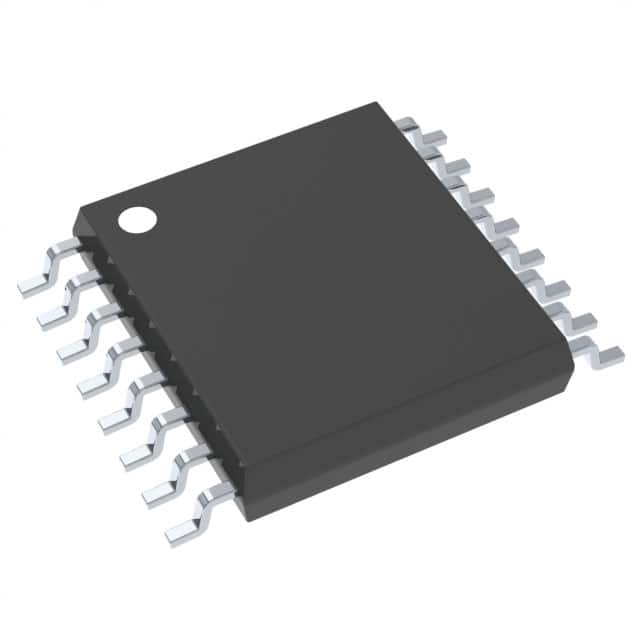
The Texas Instruments ADS8354IPW is a high-speed, 16-bit Analog-to-Digital Converter (ADC) designed for precision data acquisition. This SAR (Successive Approximation Register) ADC offers simultaneous sampling of two channels, making it suitable for applications requiring synchronized measurements.
Key electrical specifications include a maximum sample rate of 700 kSPS, a signal-to-noise ratio (SNR) of 93 dB, and a Total Harmonic Distortion (THD) of -100 dB. It supports differential input types and operates with analog supply voltages ranging from 4.5 V to 5.5 V, and digital supply voltages from 1.65 V to 5.5 V. The input voltage range is from 0 V to 5.5 V.
Designed for the extended industrial temperature range of -40°C to 125°C, the ADS8354IPW is housed in a compact 16-TSSOP package, ideal for space-constrained designs. Its surface mount capability simplifies integration into printed circuit boards.
This ADC is part of a pin-compatible family offering various resolutions and sample rates, providing flexibility for different design requirements.
| Qty | Low | High |
|---|---|---|
| 1+ | $14.54 | $14.54 |
Estimated market price range - modelled values for guidance only, not live distributor offers.
The ADS8354IPW has a resolution of 16 bits.
The maximum sample rate for the ADS8354IPW is 700 kSPS.
The ADS8354IPW has 2 input channels.
The ADS8354IPW uses an SPI interface.
The ADS8354IPW operates in the temperature range of -40°C to 125°C.
The RoHS status is RoHS3 Compliant.
The ADS8354IPW is available in a 16-TSSOP package.