

| Distributor | Stock | Pricing | MOQ | PKG | Lead Time | Date Code | On Order Quantity | On Order Delivery | |
|---|---|---|---|---|---|---|---|---|---|
|
1,173 pcs
|
1173 pcs | On Request | 1 | On Request | On Request | On Request | On Request | On Request |
| Category | |
| Manufacturer Name | |
| Architecture | |
| Configuration | |
| Data Interface | |
| Features | |
| Input Type | |
| Mounting Type | |
| Number of A | |
| Number of Bits | |
| Number of Inputs | |
| Operating Temperature | |
| Power Consumption | |
| Ratio | |
| Reference Type | |
| Sampling Rate (Per Second) | |
| Supplier Device Package | |
| Tape & Reel | |
| Voltage |
The ADS8353IRTER is a precision 16-bit successive approximation register (SAR) analog-to-digital converter from Texas Instruments. It offers a maximum sampling rate of 600 kSPS and supports two input channels with simultaneous sampling capability. The device accepts both pseudo-differential and single-ended input signals over a 0 V to 5.5 V range.
Key electrical characteristics include a typical signal-to-noise ratio (SNR) of 89 dB and a typical power consumption of 45 mW. The ADC operates with an analog supply voltage from 4.5 V to 5.5 V and a digital supply from 1.65 V to 5.5 V. It supports both external and internal reference modes, with a dual programmable buffered 2.5 V internal reference.
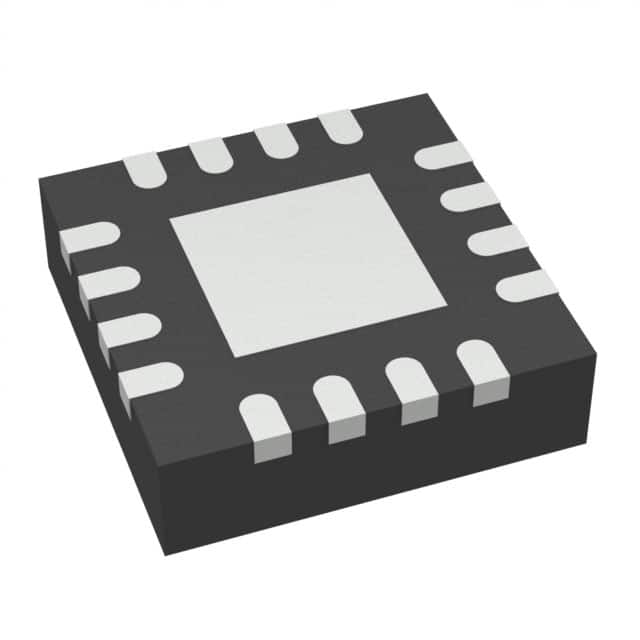
The ADS8353IRTER is housed in a 16-lead WQFN package with an exposed pad (3 mm × 3 mm) for surface-mount assembly. It is specified over the extended industrial temperature range of -40°C to 125°C, making it suitable for demanding environments.
| Qty | Low | High |
|---|---|---|
| 1+ | $11.62 | $11.62 |
Estimated market price range - modelled values for guidance only, not live distributor offers.
The ADS8353IRTER has a resolution of 16 bits.
The maximum sampling rate is 600 kSPS.
It has 2 input channels with simultaneous sampling.
The operating temperature range is -40°C to 125°C.
It is available in a 16-WFQFN Exposed Pad package (16-WQFN 3 mm × 3 mm).
Typical power consumption is 45 mW.
It uses an SPI interface.