

| Distributor | Stock | Pricing | MOQ | PKG | Lead Time | Date Code | On Order Quantity | On Order Delivery | |
|---|---|---|---|---|---|---|---|---|---|
|
12 pcs
|
12 pcs | On Request | 1 | On Request | On Request | On Request | On Request | On Request |
| Category | |
| Manufacturer Name | |
| Current | |
| Frequency | |
| Function | |
| Industrial Grade | |
| Lead Style | |
| Mounting Type | |
| Number of Outputs | |
| Operating Temperature | |
| Output Configuration | |
| Output Type | |
| SVHC Present | |
| Supplier Device Package | |
| Synchronous Rectifier | |
| Tape & Reel | |
| Topology | |
| Voltage |
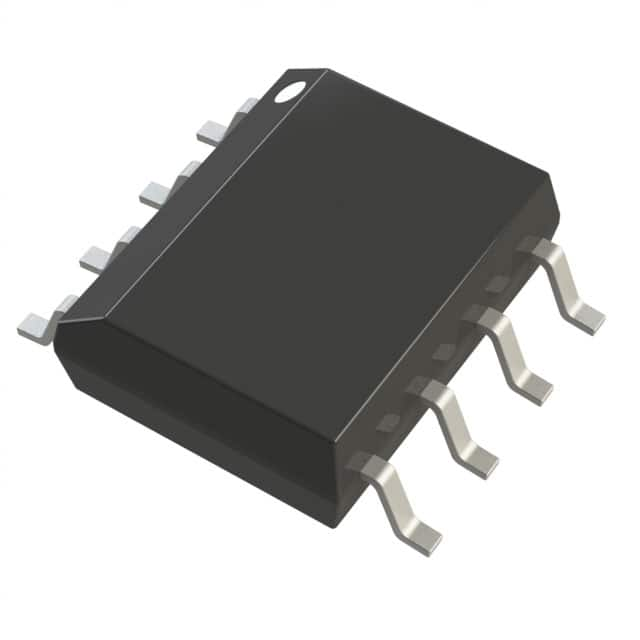
The ADP2302ARDZ-3.3-R7 is a fixed-frequency, current-mode control, step-down DC-DC regulator manufactured by Analog Devices. It operates from an input voltage range of 3.0 V to 20 V and can deliver a maximum load current of 2 A. This device provides a fixed output voltage of 3.3 V with an accuracy of ±1.5% over temperature.
The regulator operates at a switching frequency of 700 kHz, allowing for the use of small inductors and ceramic capacitors, contributing to a compact solution. Its current-mode control architecture ensures fast and stable line and load transient performance. Key features include integrated soft start, power-good output, undervoltage lockout (UVLO), overcurrent protection (OCP), and thermal shutdown (TSD).
The ADP2302ARDZ-3.3-R7 is supplied in an 8-SOIC-EP package with exposed paddle, suitable for surface mount applications. Its operating temperature range is -40°C to 125°C (TJ). This regulator is designed for intermediate power rail conversion and DC-to-DC point-of-load applications in communications, networking, industrial, healthcare, and consumer electronics.
Supported by ADIsimPower™ design tool, this component facilitates efficient power management solutions.
| Qty | Low | High |
|---|---|---|
| 1+ | $0.16 | $0.16 |
Estimated market price range - modelled values for guidance only, not live distributor offers.
3V to 20V.
Fixed 3.3V.
2A.
700 kHz.
-40°C to 125°C.
8-SOIC-EP (8-SOIC with exposed pad).
No, it is non-synchronous.