

| Distributor | Stock | Pricing | MOQ | PKG | Lead Time | Date Code | On Order Quantity | On Order Delivery | |
|---|---|---|---|---|---|---|---|---|---|
|
11 pcs
|
11 pcs | On Request | 1 | On Request | On Request | On Request | On Request | On Request |
| Category | |
| Manufacturer Name | |
| Data Rate | |
| ESD Protection | |
| Height | |
| Length | |
| Mounting Type | |
| Number of Drivers | |
| Operating Temperature | |
| Power Dissipation | |
| Propagation Delay | |
| Protocol | |
| SVHC Present | |
| Supplier Device Package | |
| Type | |
| Voltage | |
| Width |
The ADN4663BRZ from Analog Devices is a dual, CMOS, low voltage differential signaling (LVDS) line driver. It offers data rates exceeding 600 Mbps (300 MHz) with ultralow power consumption. The device features a flow-through pinout for simplified PCB layout and separation of input and output signals.
Key electrical specifications include a 3V to 3.6V operating voltage range, a maximum propagation delay of 1.5 ns, and ±15 kV ESD protection on output pins. It supports a data rate of 600 Mbps and provides ±355 mV differential signaling. The typical power dissipation is 23 mW.
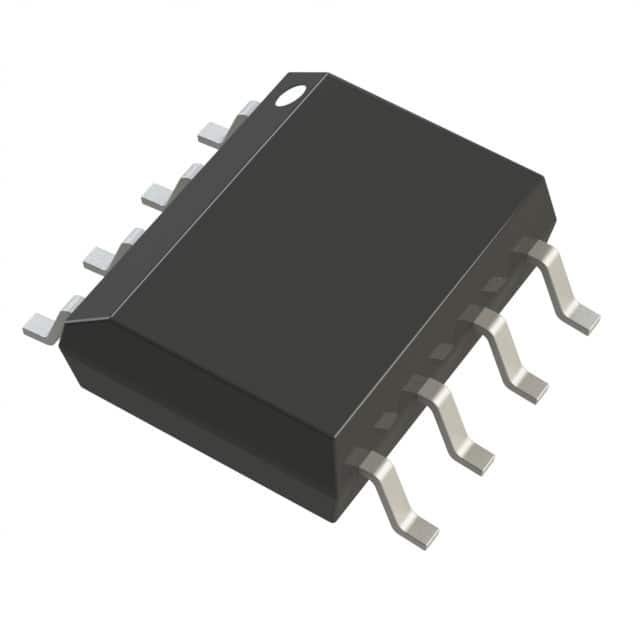
Designed for industrial applications, the ADN4663BRZ operates within a temperature range of -40°C to +85°C. It is available in a surface-mount 8-SOIC package, measuring 5 mm in length and 4 mm in width with a height of 1.5 mm.
This LVDS driver is interoperable with existing 5V LVDS receivers and conforms to the TIA/EIA-644 LVDS standard. Applications include backplane data transmission, cable data transmission, and clock distribution.
The ADN4663BRZ operates from a minimum of 3V to a maximum of 3.6V, with a nominal supply voltage of 3.3V.
The ADN4663BRZ is supplied in an 8-SOIC package.
The ADN4663BRZ is rated for an industrial operating temperature range of -40°C to +85°C.
The RoHS status for the ADN4663BRZ is listed as RoHS3 Compliant.
The ADN4663BRZ supports data rates of up to 600 Mbps.
The maximum propagation delay for the ADN4663BRZ is 1.5 ns.
The ADN4663BRZ uses Low Voltage Differential Signaling (LVDS).