

| Distributor | Stock | Pricing | MOQ | PKG | Lead Time | Date Code | On Order Quantity | On Order Delivery | |
|---|---|---|---|---|---|---|---|---|---|
|
2,440 pcs
|
2440 pcs | On Request | 1 | On Request | On Request | On Request | On Request | On Request |
| Category | |
| Manufacturer Name | |
| Current | |
| Mounting Type | |
| Number of Elements | |
| Operating Temperature | |
| Output Type | |
| Propagation Delay (Max) | |
| Quiescent Current | |
| Supplier Device Package | |
| Supplier Package | |
| Supply Voltage | |
| Type | |
| Voltage |
The ADCMP343YRJZ-REEL7 from Analog Devices is a dual, low-power, high-accuracy comparator featuring a 400 mV reference. It operates within a wide supply voltage range of 1.7 V to 5.5 V, drawing a typical quiescent current of only 6.5 µA, making it suitable for battery-powered and portable devices.
This comparator IC offers user-programmable hysteresis via a resistor string configuration, providing flexibility in setting trip points. The input range includes ground, and it features low input bias current of ±5 nA maximum. The outputs are open-drain, supporting wired-AND connections.
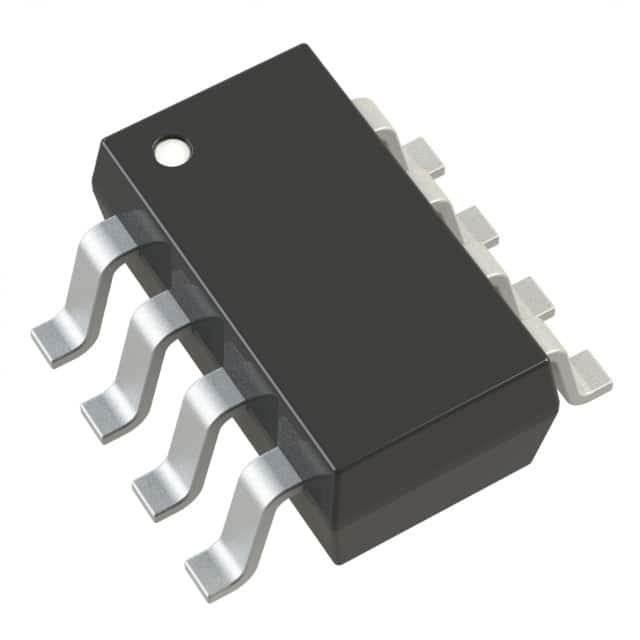
Packaged in a small SOT-23-8 surface-mount package, the ADCMP343YRJZ-REEL7 is designed for applications requiring space efficiency. Its operating temperature range is -40°C to 125°C. Key applications include Li-Ion monitoring, handheld instruments, LED/relay driving, optoisolator driving, and control systems.
The device is specified with a maximum propagation delay of 10 µs. While RoHS3 compliant, the compliance data has low confidence and requires verification. The datasheet filename suggests it might refer to a different part number (ADCMP341YRJZ-REEL7DKR-ND), and the associated image also mismatches the part number.
The supply voltage range is 1.7 V to 5.5 V.
The operating temperature range is -40°C to +125°C.
The package type is SOT-23-8, surface mount.
The typical quiescent current is 6.5 µA.
The output type is open drain.
The 400 mV reference voltage has an accuracy of ±0.275%.
The maximum propagation delay is 10 µs.