

| Distributor | Stock | Pricing | MOQ | PKG | Lead Time | Date Code | On Order Quantity | On Order Delivery | |
|---|---|---|---|---|---|---|---|---|---|
|
2,260 pcs
|
2260 pcs | On Request | 1 | On Request | On Request | 24+ | On Request | On Request | |
|
1,200 pcs
|
1200 pcs | On Request | 1 | On Request | On Request | On Request | On Request | On Request | |
|
24 pcs
|
24 pcs | On Request | 1 | On Request | On Request | On Request | On Request | On Request |
| Category | |
| Manufacturer Name | |
| Architecture | |
| Configuration | |
| Data Interface | |
| Input Capacitance | |
| Input Impedance | |
| Input Type | |
| Lead Spacing | |
| Mounting Type | |
| Number of A | |
| Number of Bits | |
| Number of Inputs | |
| Operating Temperature | |
| Power Dissipation | |
| Ratio | |
| Reference Type | |
| SVHC Present | |
| Sampling Rate (Per Second) | |
| Supplier Device Package | |
| Voltage |
The AD976CNZ is a high-speed, low-power 16-bit analog-to-digital converter from Analog Devices. It uses a successive approximation register (SAR) architecture with a switched capacitor design. The device operates from a single 5V supply and includes an internal 2.5V reference.
Key specifications include a sampling rate of 100 kSPS, a single-ended analog input with a ±10V range, and a parallel data interface. The input impedance is 13 kΩ with 22 pF capacitance. Power dissipation is 100 mW maximum.
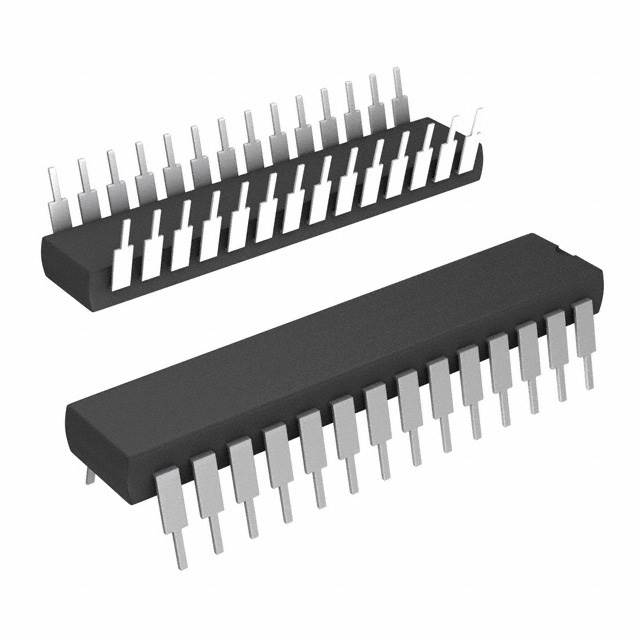
The ADC is available in a 28-lead PDIP package (28-DIP) for through-hole mounting. It operates over the industrial temperature range of -40°C to +85°C.
Suitable for industrial data acquisition systems, process control, and instrumentation requiring high resolution and moderate speed. The internal reference and calibration simplify design.
The AD976CNZ operates from a single 5V supply.
The AD976CNZ is available in a 28-DIP (0.600", 15.24mm) through-hole package.
The operating temperature range is -40°C to +85°C.
The AD976CNZ is listed as RoHS3 compliant, but this is unverified.
The sampling rate is 100 kSPS.
The analog input range is ±10V.
It uses a successive approximation register (SAR) architecture.