

| Distributor | Stock | Pricing | MOQ | PKG | Lead Time | Date Code | On Order Quantity | On Order Delivery | |
|---|---|---|---|---|---|---|---|---|---|
|
3,000 pcs
|
3000 pcs | On Request | 1 | On Request | On Request | 21+ | On Request | On Request |
| Category | |
| Manufacturer Name | |
| Differential | |
| Divider | |
| Frequency | |
| Input | |
| Input Type | |
| Mounting Type | |
| Number of Circuits | |
| Operating Temperature | |
| Output | |
| PLL | |
| Ratio | |
| Supplier Device Package | |
| Supplier Package | |
| Voltage |
The AD9528BCPZ is a versatile clock generator and JESD204B/JESD204C SYSREF generator from Analog Devices, designed for multiple device synchronization. It utilizes a dual PLL architecture to provide low jitter clock outputs. The device offers 14 outputs configurable for HSTL or LVDS, with maximum frequencies of up to 1.25 GHz for 6 outputs and 1 GHz for 8 outputs.
Key electrical specifications include a voltage range of 3.135V to 3.465V and an operating temperature range of -40°C to 85°C. The AD9528BCPZ features a typical output-to-output skew of 20 ps and absolute output jitter of less than 160 fs. It supports SPI- and I2C-compatible serial control.
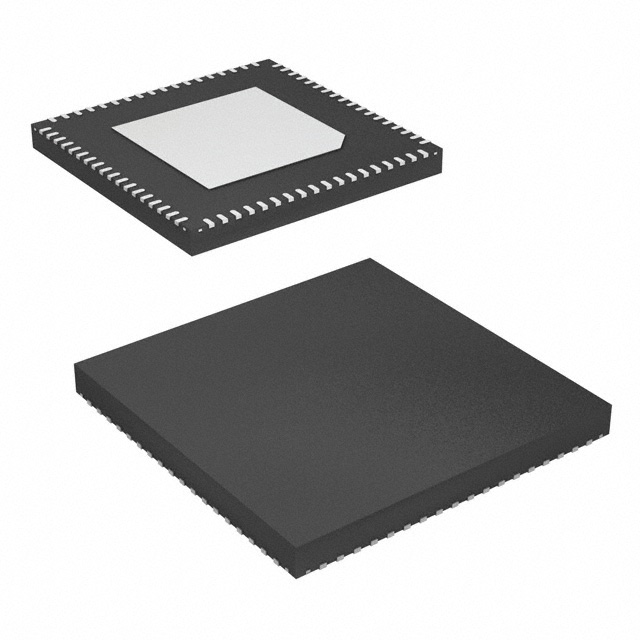
Packaged in a 72-VFQFN Exposed Pad, CSP (72-LFCSP-VQ), this surface-mount component is suitable for high-performance wireless transceivers, base stations, medical instrumentation, and clocking high-speed data converters. Its dual PLL architecture ensures low noise and low phase noise clock distribution critical for demanding applications.
The AD9528BCPZ has a maximum output frequency of 1.25 GHz for 6 outputs and 1 GHz for 8 outputs.
The AD9528BCPZ supports HSTL and LVDS output types.
The operating temperature range for the AD9528BCPZ is -40°C to 85°C.
The AD9528BCPZ is available in a 72-VFQFN Exposed Pad, CSP package, with the supplier package code 72-LFCSP-VQ (10x10).
The AD9528BCPZ is RoHS3 Compliant.
The typical output-to-output skew for the AD9528BCPZ is 20 ps.
The absolute output jitter is less than 160 fs at 122.88 MHz, with a 12 kHz to 20 MHz integration range.