

| Distributor | Stock | Pricing | MOQ | PKG | Lead Time | Date Code | On Order Quantity | On Order Delivery | |
|---|---|---|---|---|---|---|---|---|---|
|
3,920 pcs
|
3920 pcs | On Request | 1 | On Request | On Request | On Request | On Request | On Request |
| Category | |
| Manufacturer Name | |
| Architecture | |
| Configuration | |
| Data Interface | |
| Input Type | |
| Mounting Type | |
| Number of A | |
| Number of Bits | |
| Number of Inputs | |
| Operating Temperature | |
| Ratio | |
| Reference Type | |
| Sampling Rate (Per Second) | |
| Supplier Device Package | |
| Voltage |
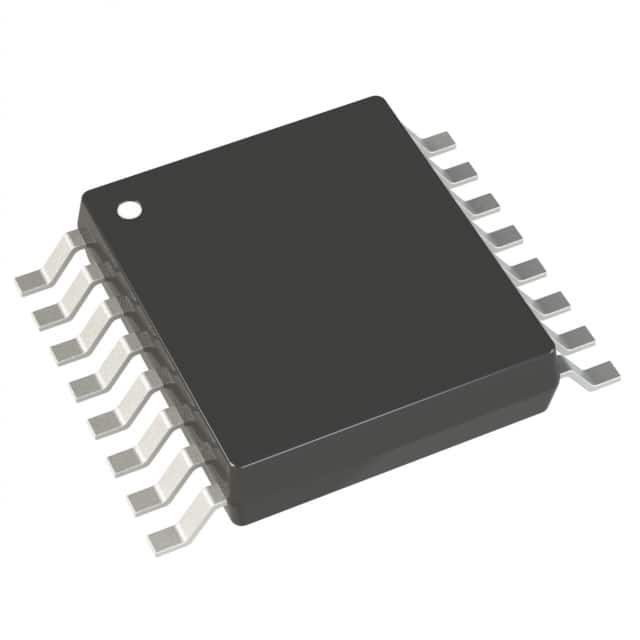
The AD7993BRUZ-0 is a 10-bit, 4-channel successive approximation (SAR) analog-to-digital converter (ADC) from Analog Devices. It integrates a 4-channel input multiplexer, track-and-hold amplifier, and an I2C-compatible serial interface in a 16-lead TSSOP package.
The device supports a single-ended input configuration and provides a fast conversion time of 2 µs typical, enabling a throughput rate of 188 kSPS. It operates from an analog supply voltage of 2.7 V to 5.5 V and requires an external voltage reference. The operating temperature range is -40°C to +125°C.
The external reference architecture allows the user to set the full-scale input range to match the application's measurement needs. The I2C interface supports standard, fast, and high-speed modes, providing flexibility in system integration. The sequencer operation and automatic cycle interval mode facilitate multi-channel monitoring with minimal software overhead.
The AD7993BRUZ-0 is offered in a 16-TSSOP package designed for surface-mount assembly. Its small footprint and low power consumption make it suitable for space-constrained portable and industrial applications.
The analog supply voltage ranges from 2.7 V to 5.5 V.
It operates from -40°C to +125°C.
It is available in a 16-TSSOP (0.173", 4.40mm width) surface-mount package.
Yes, it is listed as RoHS3 compliant in the existing database records.
It has four single-ended analog input channels.
The sampling rate is 188 kSPS.
It uses an I2C-compatible serial interface.