

| Distributor | Stock | Pricing | MOQ | PKG | Lead Time | Date Code | On Order Quantity | On Order Delivery | |
|---|---|---|---|---|---|---|---|---|---|
|
8,777 pcs
|
8777 pcs | On Request | 1 | On Request | On Request | On Request | On Request | On Request |
| Category | |
| Manufacturer Name | |
| Channel | |
| Channel Capacitance (CS(off), CD(off)) | |
| Input Capacitance | |
| Mounting Type | |
| Multiplexer | |
| Number of Circuits | |
| On | |
| Operating Temperature | |
| Power Dissipation | |
| SVHC Present | |
| Supplier Device Package | |
| Switch Time (Ton, Toff) (Max) | |
| Turn Off Time | |
| Voltage |
The AD7503JNZ is a monolithic CMOS 8-channel analog multiplexer designed to switch one of eight analog inputs to a single common output. The channel selection is controlled by three binary address lines and an enable input, with inverted enable logic compared to the AD7501. All digital inputs are TTL/DTL and CMOS logic compatible.
Key electrical specifications include a typical on-resistance of 170 ohms (300 ohms maximum), typical turn-on and turn-off times of 0.8 microseconds, and very low power dissipation of 30 microwatts. The device operates from a ±15 V supply and features low leakage currents with source off leakage of 0.2 nA typical and output off leakage of 1 nA typical.
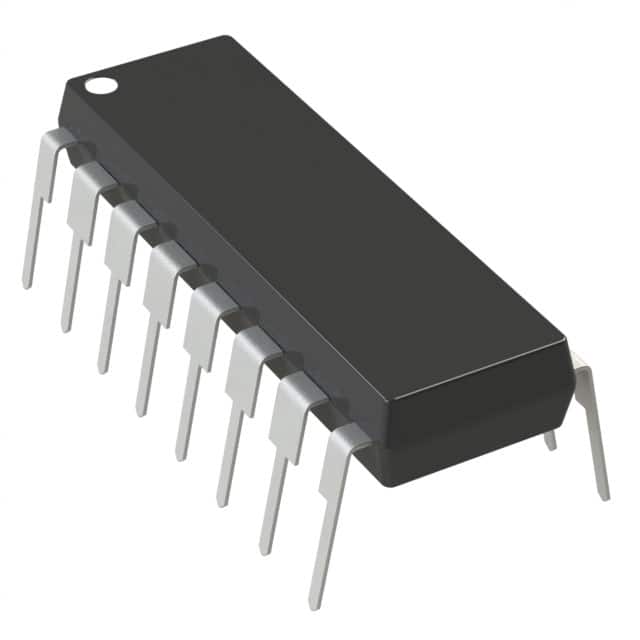
The AD7503JNZ is housed in a standard 16-lead DIP package (16-DIP, 0.300 inch width) with through-hole mounting. It is specified for operation over the commercial temperature range of 0°C to 70°C. This multiplexer is suitable for data acquisition systems, test equipment, and industrial control applications requiring reliable analog signal routing.
The typical on-resistance is 170 ohms, with a maximum of 300 ohms.
The operating temperature range is 0°C to 70°C.
It comes in a 16-DIP (0.300", 7.62mm) through-hole package, also known as 16-PDIP.
The nominal supply voltage is ±15 V.
The part is listed as RoHS3 Compliant, but this data is unverified.
Both turn-on and turn-off times are typically 0.8 microseconds.
It is an 8:1 multiplexer, switching one of eight inputs to a common output.