

| Distributor | Stock | Pricing | MOQ | PKG | Lead Time | Date Code | On Order Quantity | On Order Delivery | |
|---|---|---|---|---|---|---|---|---|---|
|
2,050 pcs
|
2050 pcs | On Request | 1 | On Request | On Request | 24+ | On Request | On Request |
| Category | |
| Manufacturer Name | |
| Architecture | |
| Configuration | |
| Data Interface | |
| Input Type | |
| Lead Style | |
| Mounting Type | |
| Number of A | |
| Number of Bits | |
| Number of Inputs | |
| Operating Temperature | |
| Ratio | |
| Reference Type | |
| Sampling Rate (Per Second) | |
| Supplier Device Package | |
| Voltage |
The AD677KD is a 16-bit, 100 kSPS sampling analog-to-digital converter from Analog Devices. It uses a successive approximation register (SAR) architecture with on-chip autocalibration to achieve excellent linearity and dynamic performance. The converter accepts a single-ended analog input with an external voltage reference and provides serial data output via an SPI-compatible interface.
Key electrical specifications include a typical integral nonlinearity of 1 LSB, signal-to-noise and distortion ratio of 92 dB, and total harmonic distortion of -99 dB. The full power bandwidth is 1 MHz. Power dissipation is 450 mW typical with a 10 V reference and 360 mW with a 5 V reference. The device operates from +5 V analog and digital supplies, plus ±12 V supplies.
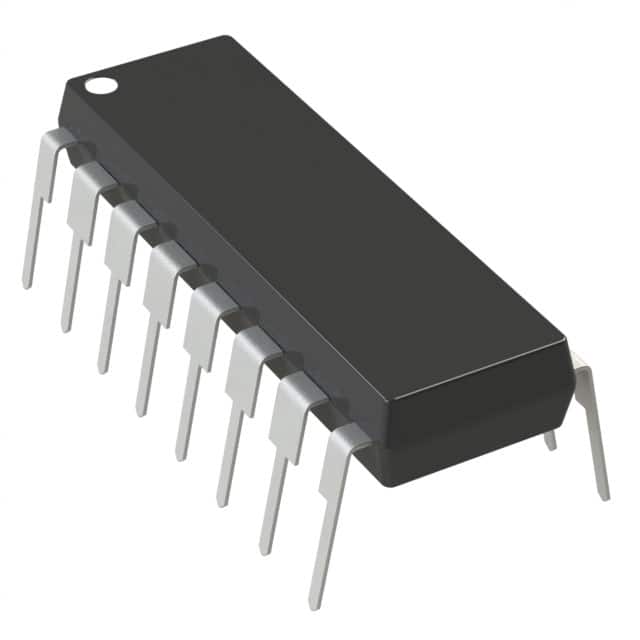
The AD677KD is housed in a 16-pin DIP (0.300" body width) with through-hole mounting. It is specified for the commercial temperature range of 0°C to 70°C. The package is a 16-PDIP supplier device package. This ADC is suitable for precision data acquisition systems requiring high resolution and moderate sampling rates.
The AD677KD has a resolution of 16 bits.
The sampling rate is 100 kSPS (100,000 samples per second).
It uses a successive approximation register (SAR) architecture.
The AD677KD has a single-ended input with one channel.
The operating temperature range is 0°C to 70°C.
It is available in a 16-pin DIP (0.300", 7.62mm) package, also known as 16-PDIP.
The AD677KD requires +5 V analog and digital supplies, plus ±12 V supplies.