

| Distributor | Stock | Pricing | MOQ | PKG | Lead Time | Date Code | On Order Quantity | On Order Delivery | |
|---|---|---|---|---|---|---|---|---|---|
|
250 pcs
|
250 pcs | On Request | 1 | On Request | On Request | N/A | On Request | On Request |
| Category | |
| Manufacturer Name | |
| Current | |
| Efficiency | |
| Frequency | |
| Function | |
| Mounting Type | |
| Number of Outputs | |
| Operating Temperature | |
| Output Configuration | |
| Output Current | |
| Output Type | |
| Output Voltage | |
| Quiescent Current | |
| Supplier Device Package | |
| Synchronous Rectifier | |
| Topology | |
| Voltage |
The Skyworks Solutions AAT2148IVN-0.6-T1 is a versatile step-down (buck) DC DC switching regulator designed for portable applications. It features a wide input voltage range of 2.7V to 5.5V and can deliver up to 1A of output current. The output voltage is adjustable, starting as low as 0.6V.
This device operates at a 2MHz switching frequency, which helps minimize the size of external components. It incorporates a low-noise architecture, reducing ripple and spectral noise, and offers up to 98% efficiency. Key electrical features include a low 37 μA no-load quiescent current and a fast load transient response.
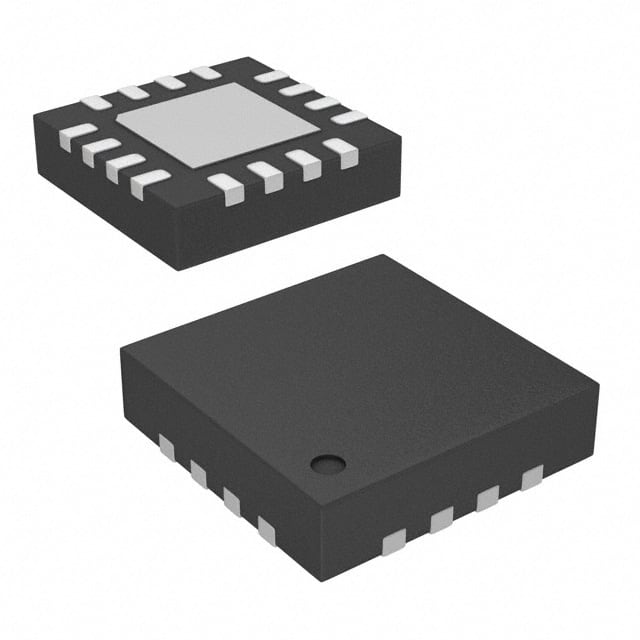
The AAT2148IVN-0.6-T1 is housed in a thermally enhanced 16-QFN (3x3mm) package with an exposed pad for improved heat dissipation. It is designed for surface mounting and operates over a temperature range of -40°C to +85°C.
Applications for this regulator include cellular phones, digital cameras, handheld instruments, microprocessor/DSP core power, PDAs, and USB devices.
| Qty | Low | High |
|---|---|---|
| 1+ | $0.16 | $0.16 |
Estimated market price range - modelled values for guidance only, not live distributor offers.
The input voltage range is 2.7V to 5.5V.
The maximum output current is 1A.
The operating junction temperature range is -40°C to +85°C.
It is available in a 16-QFN (3x3) package with an exposed pad.
The switching frequency is 2MHz.
Yes, the output voltage is adjustable from 0.6V up to the input voltage.