

| Distributor | Stock | Pricing | MOQ | PKG | Lead Time | Date Code | On Order Quantity | On Order Delivery | |
|---|---|---|---|---|---|---|---|---|---|
|
6,364 pcs
|
6364 pcs | On Request | 1 | On Request | On Request | On Request | On Request | On Request | |
|
2 pcs
|
2 pcs | On Request | 1 | On Request | On Request | On Request | On Request | On Request |
| Category | |
| Manufacturer Name | |
| Data Rate | |
| ESD Protection | |
| Input Signal | |
| Mounting Type | |
| Number of Drivers | |
| Operating Temperature | |
| Output Signal | |
| Output Voltage | |
| Power Dissipation | |
| Propagation Delay | |
| Protocol | |
| Supplier Device Package | |
| Type | |
| Voltage |
The Texas Instruments 5962-9762101QFA is a quad LVDS transmitter IC that implements low-voltage differential signaling. This technology reduces power consumption and increases switching speeds compared to older standards, allowing for operation with a 3.3V supply rail.
This device features four current-mode drivers with a signaling rate of 400 Mbps. It accepts LVTTL input signals and outputs LVDS signals. The operating temperature range is -55°C to 125°C, making it suitable for demanding applications. Key electrical characteristics include a typical output voltage of 350 mV into a 100-ohm load and a minimum differential output voltage magnitude of 247 mV.
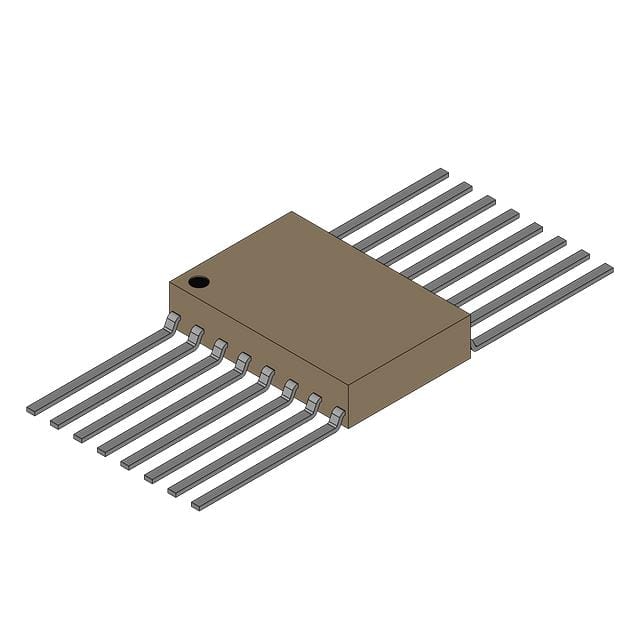
The SN55LVDS31 is housed in a 16-pin Ceramic Flatpack (CFP) package and is designed for surface mounting. It meets or exceeds the requirements of the ANSI TIA/EIA-644 standard. The part is pin-compatible with other industry standard drivers like AM26LS31 and MC3487.
| Qty | Low | High |
|---|---|---|
| 1+ | $51.86 | $51.86 |
Estimated market price range - modelled values for guidance only, not live distributor offers.
The operating voltage is 3V to 3.6V.
The package type is a 16-pin Ceramic Flatpack (CFP).
The operating temperature range is -55°C to 125°C.
The RoHS status is RoHS3 Compliant.
The Moisture Sensitivity Level is 1 Unlimited.
The device supports a signaling rate of 400 Mbps.
It accepts LVTTL input signals and outputs LVDS signals.