

| Distributor | Stock | Pricing | MOQ | PKG | Lead Time | Date Code | On Order Quantity | On Order Delivery | |
|---|---|---|---|---|---|---|---|---|---|
|
1,220 pcs
|
1220 pcs | On Request | 1 | On Request | On Request | On Request | On Request | On Request | |
|
50 pcs
|
50 pcs | On Request | 1 | On Request | On Request | On Request | On Request | On Request |
| Category | |
| Manufacturer Name | |
| Current | |
| Current Transfer Ratio (Min) | |
| Input Type | |
| Lead Spacing | |
| Mounting Type | |
| Number of Channels | |
| Operating Temperature | |
| Output Type | |
| Response Time | |
| Supplier Device Package | |
| Turn Off Time | |
| Turn On | |
| Voltage |
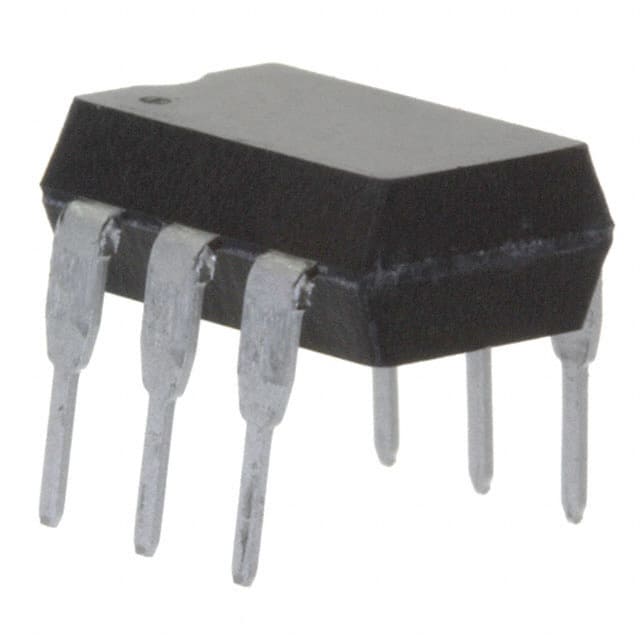
The Vishay Dale 4N35 is a transistor output optocoupler housed in a standard 6-DIP package. It provides a high input-output isolation voltage of 5000Vrms, making it suitable for applications where electrical isolation is critical.
Key electrical characteristics include a minimum current transfer ratio (CTR) of 100% at 10mA input current and a maximum collector current of 50mA. The response times are typically 10µs for both turn-on and turn-off.
This optocoupler operates over a temperature range of -55°C to 100°C. Its through-hole mounting type facilitates easy integration into printed circuit boards. The 4N35 is commonly used in power supply regulators, digital logic inputs, and microprocessor inputs.
Compliance information indicates RoHS3 compliance and an MSL 1 rating. The device is designed for reliable performance in various industrial and electronic applications requiring robust isolation.
| Qty | Low | High |
|---|---|---|
| 1+ | $0.99 | $0.99 |
Estimated market price range - modelled values for guidance only, not live distributor offers.
The 4N35 optocoupler provides an isolation voltage of 5000Vrms.
The minimum CTR for the 4N35 is 100% at a forward current of 10mA.
The 4N35 operates within a temperature range of -55°C to 100°C.
The 4N35 optocoupler is available in a 6-DIP package.
The 4N35 is used in power supply regulators, digital logic inputs, and microprocessor inputs.