

| Distributor | Stock | Pricing | MOQ | PKG | Lead Time | Date Code | On Order Quantity | On Order Delivery | |
|---|---|---|---|---|---|---|---|---|---|
|
800 pcs
|
800 pcs | On Request | 1 | On Request | On Request | On Request | On Request | On Request |
| Category | |
| Manufacturer Name | |
| Ambient Temperature | |
| Coil Current | |
| Coil Insulation | |
| Coil Type | |
| Coil Voltage | |
| Contact Form | |
| Contact Material | |
| Contact Rating (Current) | |
| Mounting Type | |
| Must Operate Voltage | |
| Must Release Voltage | |
| Operate Time | |
| Operating Temperature | |
| Rated Voltage | |
| Relay Type | |
| Release Time | |
| Switching Voltage | |
| Termination Style |
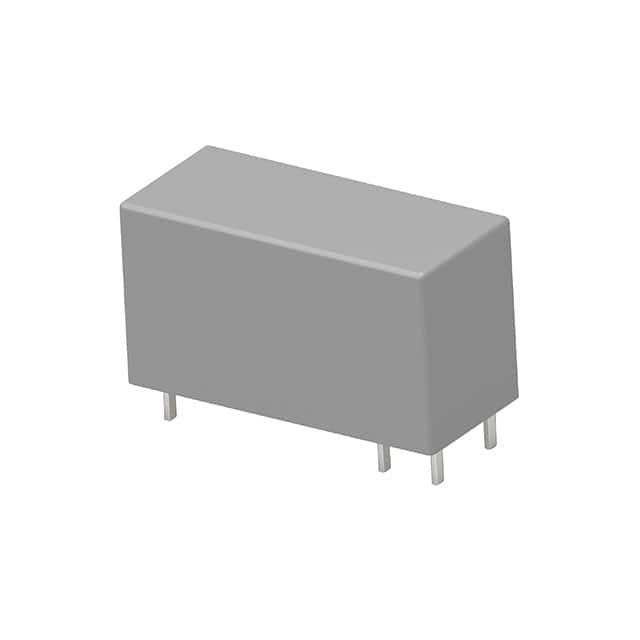
This TE Connectivity 1-1415536-9 is a general purpose power relay designed for various applications. It features a Single Pole Single Throw Normally Open (SPST-NO) contact configuration, capable of handling a contact current of 16A and a maximum switching voltage of 400VAC.
The relay operates with a 12VDC coil voltage and is non-latching. Key electrical specifications include an operate time of 8ms and a release time of 6ms. The contact material is Silver Nickel (AgNi), chosen for its durability and conductivity.
Designed for through-hole mounting, this relay offers a termination style of PC Pin. It is rated for an operating temperature range of -40°C to 105°C, making it suitable for demanding environments. The coil insulation is Class F, ensuring reliable performance.
Compliance information includes RoHS3 compliance, MSL 1, and REACH unaffected status. This power relay is a robust component for applications requiring reliable switching capabilities.
| Qty | Low | High |
|---|---|---|
| 1+ | $2.00 | $2.00 |
Estimated market price range - modelled values for guidance only, not live distributor offers.
The contact current rating is 16A.
The coil voltage is 12VDC.
It has a SPST-NO (1 Form A) contact configuration.
The maximum switching voltage is 400VAC.
The operating temperature range is -40°C to 105°C.
It is mounted using the through-hole method.